Greetings, glory seekers!
Our inevitable march towards March 12th continues, with packs laden with fresh rations and strength coursing through our veins. Two more months folks. We’ll be getting there soon enough, just you wait! In the meantime, let’s reveal some more mysteries shall we? We shared that each class had two subclasses - let’s get into the thick of it!

It is dangerous to go alone. Take these. For real though please don’t, my Associate Producer would kill me.
Before we start, don't forget to wishlist Solasta II on Steam - it helps us a ton! Also, friendly reminder that on March 12th the level cap will still be level 4. While we are going to reveal quite a bit about the future features of our new subclasses, we also want to remind everyone that Early Access means things may change. What is presented below is our initial intentions for the archetypes, but it’s always possible that a feature may be tweaked or replaced during development. And with that out of the way, leeeeet’s go!

The Fighter
Starting with the vanilla ice cream of the lineup (ain’t no shame in liking vanilla), let’s talk Fighter! Being considered the most basic class in Tabletop does not mean they’re bad - far from it in fact. Having received a slew of improvements with 2024 Ruleset, the once humble Fighter now can inflict various ailments thanks to Weapon Masteries, such as Sap forcing the target’s next attack roll to be made with disadvantage, or Topple potentially knocking one’s opponent prone.
Second Wind is also getting buffed with additional charges being available (2 at level 1, 3 at level 4, and finally 4 at level 10), and those charges can be used out of combat to help with Ability Checks thanks to Tactical Mind. Of course, the Fighter wouldn’t be themselves without their key feature - Action Surge, which lets them take an additional action on their turn… although now it can no longer be used to cast a spell, as the Magic Action is not compatible with its use!
The Commander
Returning from Solasta I will be the Commander Subclass! A rare martial class with strong support capabilities, the Commander was one of the fan favourites - and in a game where team coordination is key, it is without surprise that we chose to bring it back.
Gruff Authority gives them more out of combat tools by giving them two skill proficiencies, as well as adding their Strength modifier to all their Intimidation and Persuasion checks. Unsurprisingly their key feature Rousing Shout returns as well, giving them the ability to grant all themselves and all friendly creatures advantage on their next attack by filling them with determination.
Later on when the level cap increases, they will get access to Coordinated Defense which allows them to forgo one of their attacks to grant the benefit of the Dodge Action to an ally. They also unlock an upgrade to their Rousing Shout by making it also grant temporary HP to all affected allies, massively increasing their survivability throughout any fight.
The Aether Warden
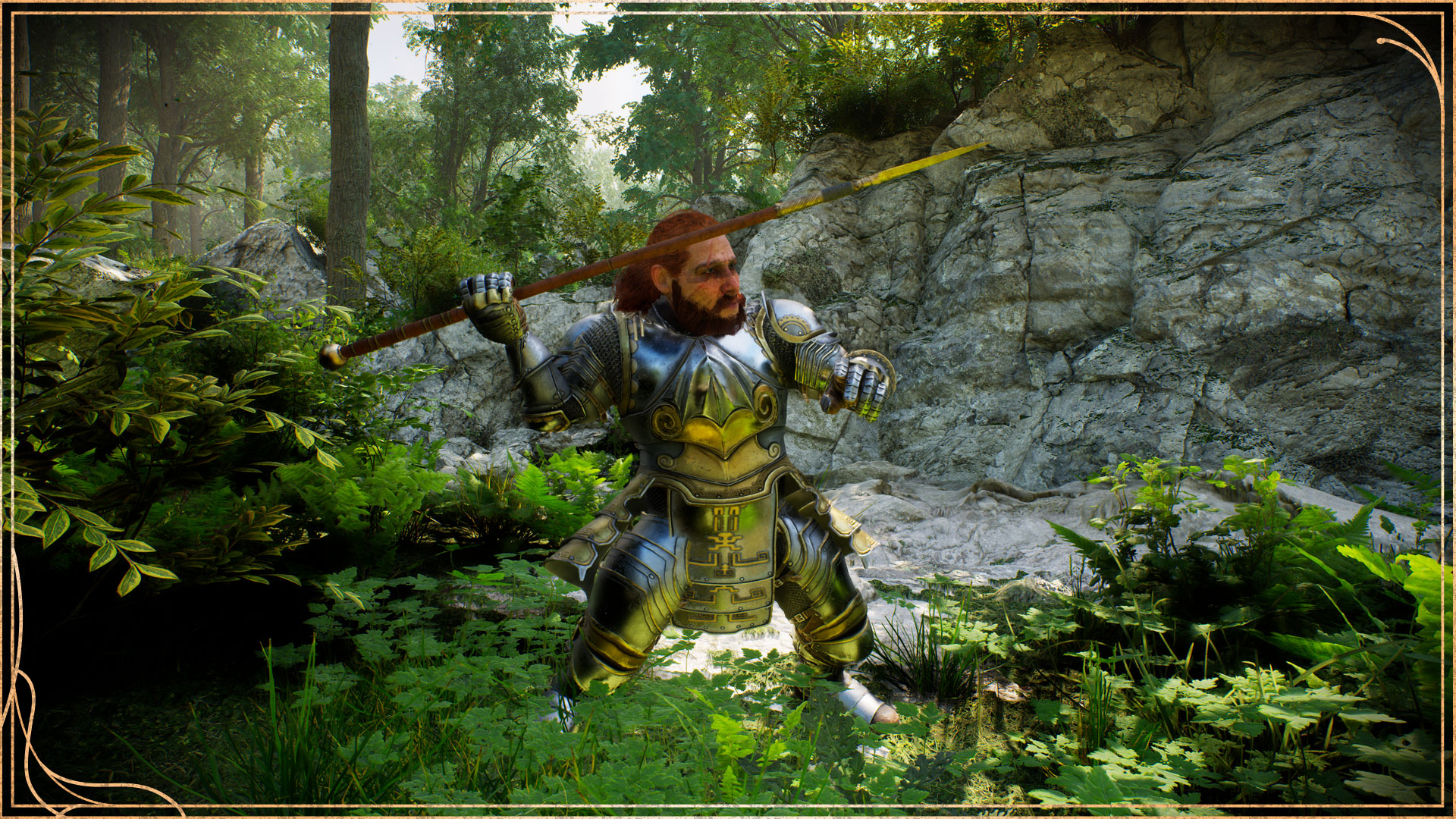
Originally pitched as the Earth Warden, the Aether Warden was imagined as an ancient and illusive order native to Neokos, composed of roaming mythical warriors able to tap into the power of the land while fighting. We wanted another go at a half-caster Fighter, with Spellblade having quite a few issues in this regard - it started much too similar to the official Eldritch Knight, and the adjustments we did afterwards did not help much as it left a fairly fundamental issue. There was no real payoff for Spellblades to be casting spells in combat instead of just attacking like every other fighter (until level 15 with Arcane Escape).
The Aether Warden, on the other hand, starts off much stronger with Mythology of Might - making them a Constitution based half-caster as their Spell Save DC and Spell Attack Modifier all rely on Constitution instead of Intelligence. Experienced Tabletop players will know that Constitution based spellcasters are by nature freakishly powerful, as they are able to massively increase both their survivability and offensive capacities at the same time; which is why being a half-caster helps keeping the Aether Warden’s magic powers in check.
This allows the Aether Warden’s spells - limited as they are - to have a high save DC, making them more efficient at disabling enemies with control spells such as Sleep or Hideous Laughter… and also for the Aether Warden to more reliably keep their concentration up when damaged, which feeds into their level 7 feature Arcane Strength - increasing their Strength and AC while concentrating on a spell, scaling with the level of the spell slot used. At last, level 10 will unlock Earthen Succor, a straightforward feature which heals the Aether Warden based on the level of spell slot used and increased effect if the casting time takes an action.
A monstrous juggernaut on the battlefield, a high level Aether Warden is incredibly hard to take down as they prioritize a high Constitution score which means a large HP pool, and they have access to multiple sources of healing with both Second Wind and Earthen Succor. Arcane Strength improves their fighting capabilities with additional Strength and AC as long as they keep concentration, which again is beefed up by their high CON, and their spells are also hard to resist since they don’t have to split their attention between highly valued Fighter attributes and Intelligence.

The Wizard
At the opposite spectrum of the Fighter, we have the good old Wizard! Spellcaster supreme, versatile as can be, the 2024 ruleset did not change much for them. They do get a couple of new features, such as Scholar at level 2 granting them expertise in one skill and Memorize Spell allowing them to swap a prepared spell after a Short Rest, but they mostly remain the Wizard we all know and love. Someone who casts a lot of Fireballs.
The Court Mage
Another fan favorite, the Court Mage is coming back to Solasta II. Magic-wielding bodyguards, they are proficient with Shields and can use their reaction to increase a nearby ally’s AC when they get attacked. Their signature feature is their Spell Shield which can be cast on an ally to absorb a large amount of damage before breaking, protecting them (and the Court Mage) from harm.
Solasta II’s version of the archetype has also been heavily reworked at higher levels to fit the Sourcebook version of the Court Mage. Their level 6 feature becomes Vigilant Protector instead of Counterspell Mastery, allowing the Court Mage to teleport next to whoever is protected by their Spell Shield with a bonus action and granting them bonus AC while next to them, while their level 10 feature Shield Resonance allows them to select a damage type whenever they create a Spell Shield to gain resistance against it while protected by it.
Most of those changes were to give the Court Mage a more unique identity playing around their Spell Shield, instead of leaning too much into Counterspell / Resistance to Magic. While the latter thematically fits an anti-magic bodyguard, it also infringes a little too much on the playground of the official Abjuration Wizard to our liking.
The School of Ruin
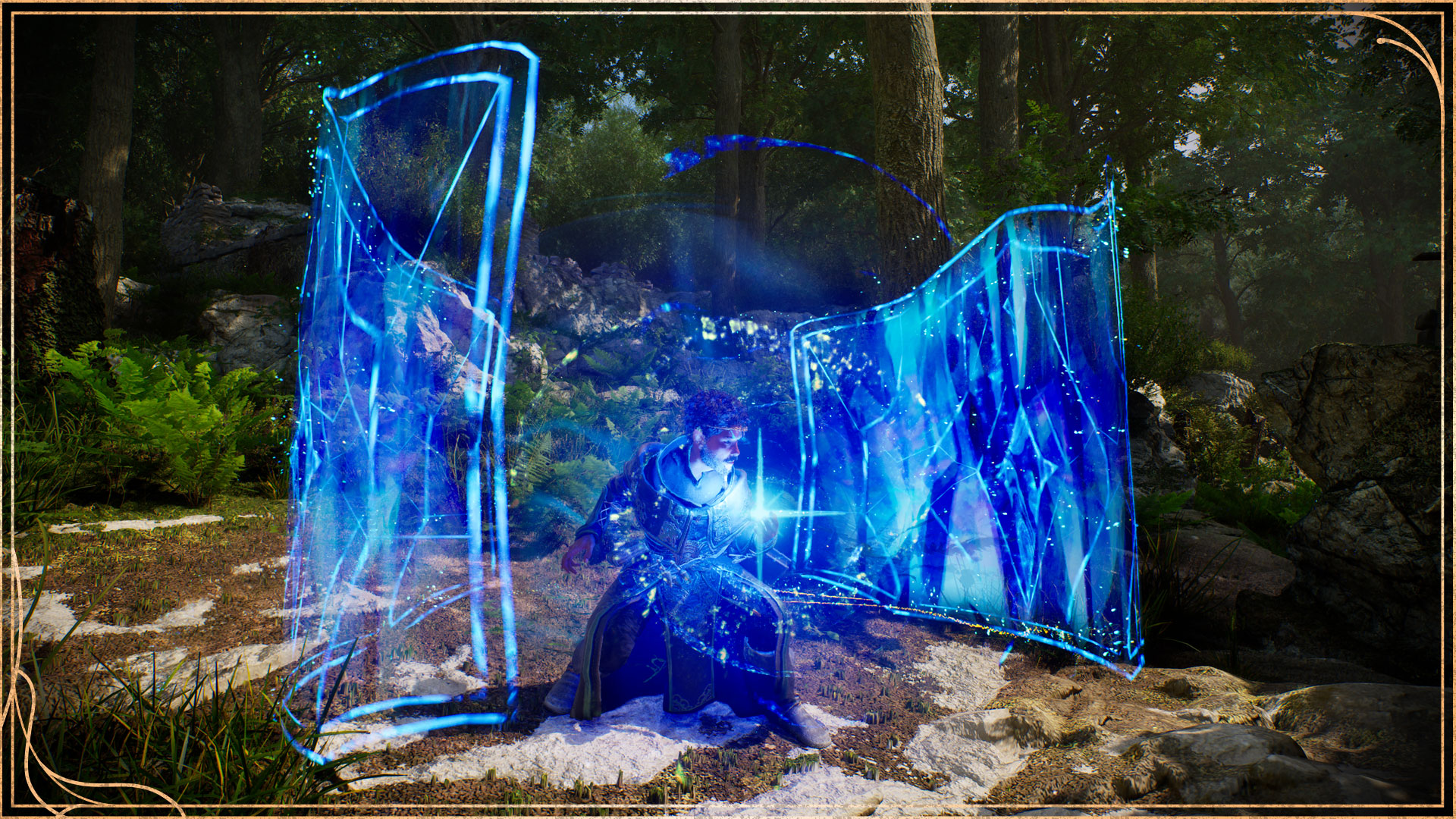
New to Solasta II, the Ruin Wizard is a damage focused archetype adept at taking down other spellcasters (and anyone else as well, don’t you worry about that). At level 3, Ruination Savant grants them 2 additional spells that deal damage to add to their spellbooks, with another one as well each time they level up. Destructive Magic, their second feature, gives their spell 1 additional damage for each damage dice they roll. For instance, Scorching Ray would deal 2d6 + 2 fire damage per ray, and Shatter would deal 3d8+3 Thunder damage in its AoE.
At higher levels, Mana Feedback allows the Ruin Wizard to return a portion of the damage received when they are hit by a spell once per short rest, punishing spellcasters for targeting them. Finally, Deadly Resonance is a limited power that allows them to repeat a portion of the damage they inflict on their target with spells at the start of their next turn. Note that both of these features allow their victims to roll Constitution saving throws to dampen the damage received.
The School of Ruin is a straightforward subclass, it’s there for those who just want to see their enemies’ HP burn down to zero as fast as possible. Everything in their kit is about dealing damage, and they excel at nuking down large swathes of foes.

The Rogue
Another classic of D&D, the Rogue gains a few tools with the 2024 update with Steady Aim at level 3 that gives them a more reliable way to hit their Sneak Attack at range and Cunning Strike at level 5 that allows them to trade a part of their Sneak Attack damage for various effects such as poisoning or tripping their enemies instead. They also benefit from the addition of 2024 Weapon Masteries, as they also get two weapons to master! The most notable mastery being Nick which lets them attack with two light weapons without having to spend their bonus action, thus allowing them to use Cunning Action as well (this has always been a pain point for dual-wielding rogues in the past).
The Shadowcaster
Compared to the Commander and the Court Mage, the Shadowcaster was not a fan favorite… and yet it is returning? Why is that? Well my good readers, those who played a Shadowcaster in Solasta I know that one of its major flaws was that its identity, Shadow Casting, only came at level 13. Which is a little problematic when you start at level 1. This archetype was in our bucket of “thematically interesting, but poorly executed” which we wanted to revisit, and so we did!
Shadow Casting now unlocks at level 3 when you unlock the subclass, and allows you to use Sneak Attack on spells with attack rolls. You are also no longer limited in the schools to choose your spells from, which means you have more options to choose from.
At higher level, the Shadowcaster gains a stronger version of their previous Shadow Dodge, now named Into the Shadows, which allows them to teleport up to 25’ as a bonus action multiple times per day, as well as granting them two additional cantrips to learn.
The Scavenger
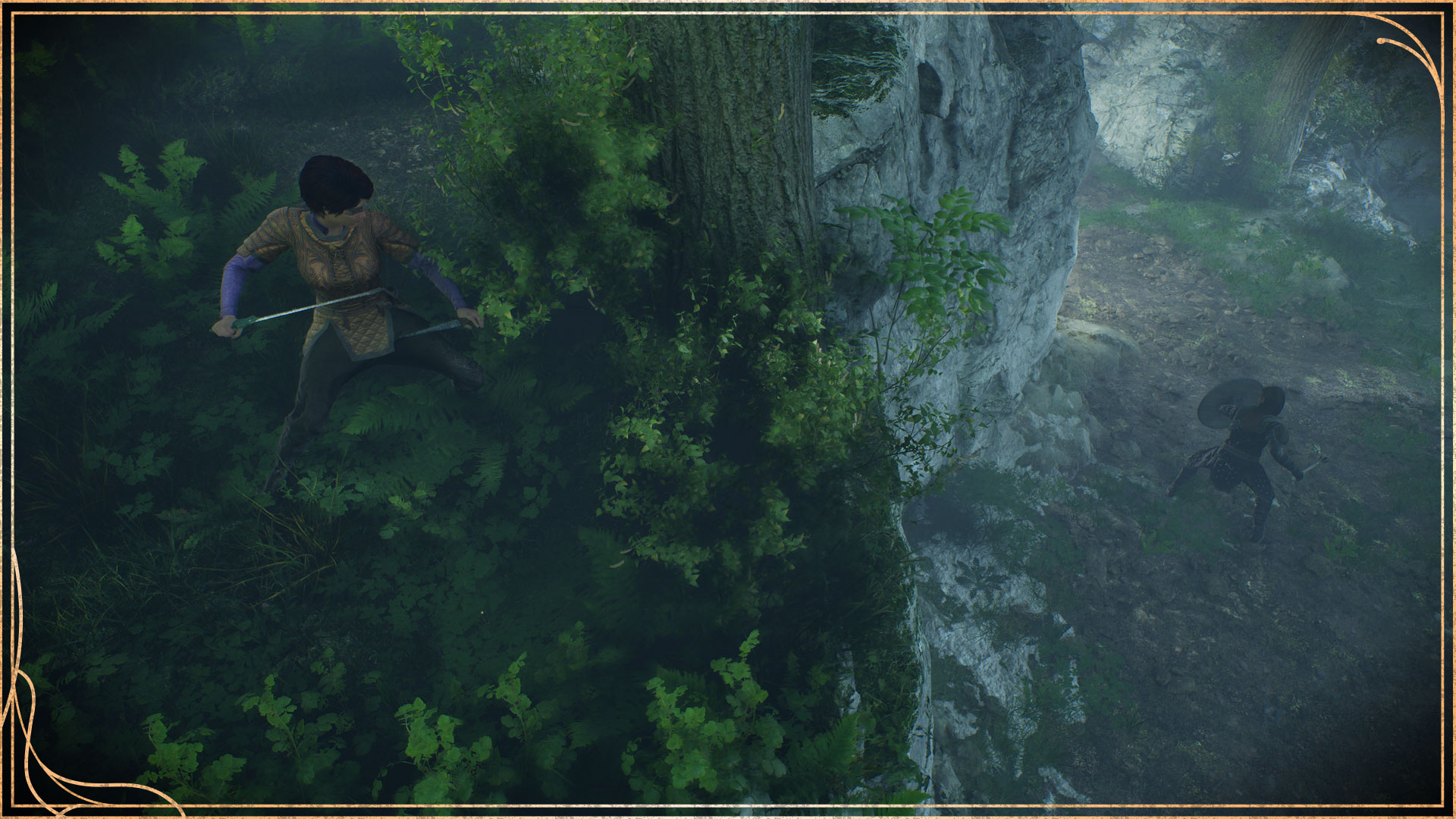
Inspired by the faction of the same name who calls the Badlands home, the Scavenger Rogue is a survivalist who turns trash into treasure. Serrated Edge gives them additional slashing damage when attacking with a weapon once per turn, increasing their burst potential when stacked on top of a Sneak Attack. Haggler is a utility feature that adds a 10% price modifier when they buy or sell anything when dealing with merchants.
At higher level, Slippery Fellow allows them to use Cunning Action to take the Dodge action a certain number of times per day. Simple, but very effective at keeping them alive!

The Paladin
Our sacred warrior will be here for the launch of Early Access, ready to smite! Speaking of which, the Paladin had some limitations added with the 2024 update - with Divine Smite becoming a Paladin-only spell using a Bonus Action. While some people see that as a large nerf (which let’s be honest, it is), the good thing about this change is that Paladins are no longer encouraged to hoard their spell slots to spend it all in one or two turns spamming Divine Smite - opening their choices by taking down the former obviously optimal option.
But it’s not just limitations they were stricken with. Lay on Hands is now a Bonus Action, removing the awkward moment of “should I risk trying to finish my foe, potentially dying if I miss? Or heal myself but potentially lose all the health I gained back if I get hit, effectively wasting a turn”. Nahhh, now we healing AND killing on the same turn! They also get Abjure Foes at level 9, a new way to use their Channel Divinity by frightening a number of foes, severely impairing their ability to fight. Oh and unsurprisingly, they also get to benefit from the Weapon Mastery addition!
The Oath of Judgement
Coming straight from the Lost Valley DLC, the Judgment Paladin is an offensive archetype that chases the unjust and exact punishment (usually in the form of a swift death). As they were already pretty solid in terms of gameplay, very little has changed in Solasta II.
Weight of Justice still restrains a target when hit, although it now also does a small amount of Force Damage on top and no longer needs a Bonus Action to avoid preventing it from being used with Divine Smite. Purge Corruption can now remove additional conditions now such as Stunned and Restrained on top of the previous ones like Poisoned and Paralyzed. And Aura of Righteousness, which increases damage dealt while under its effects, now clarifies that it only works with attacks - so no longer will it make Magic Missile the equivalent of fantasy shredder bullets.
The Oath of Liberation
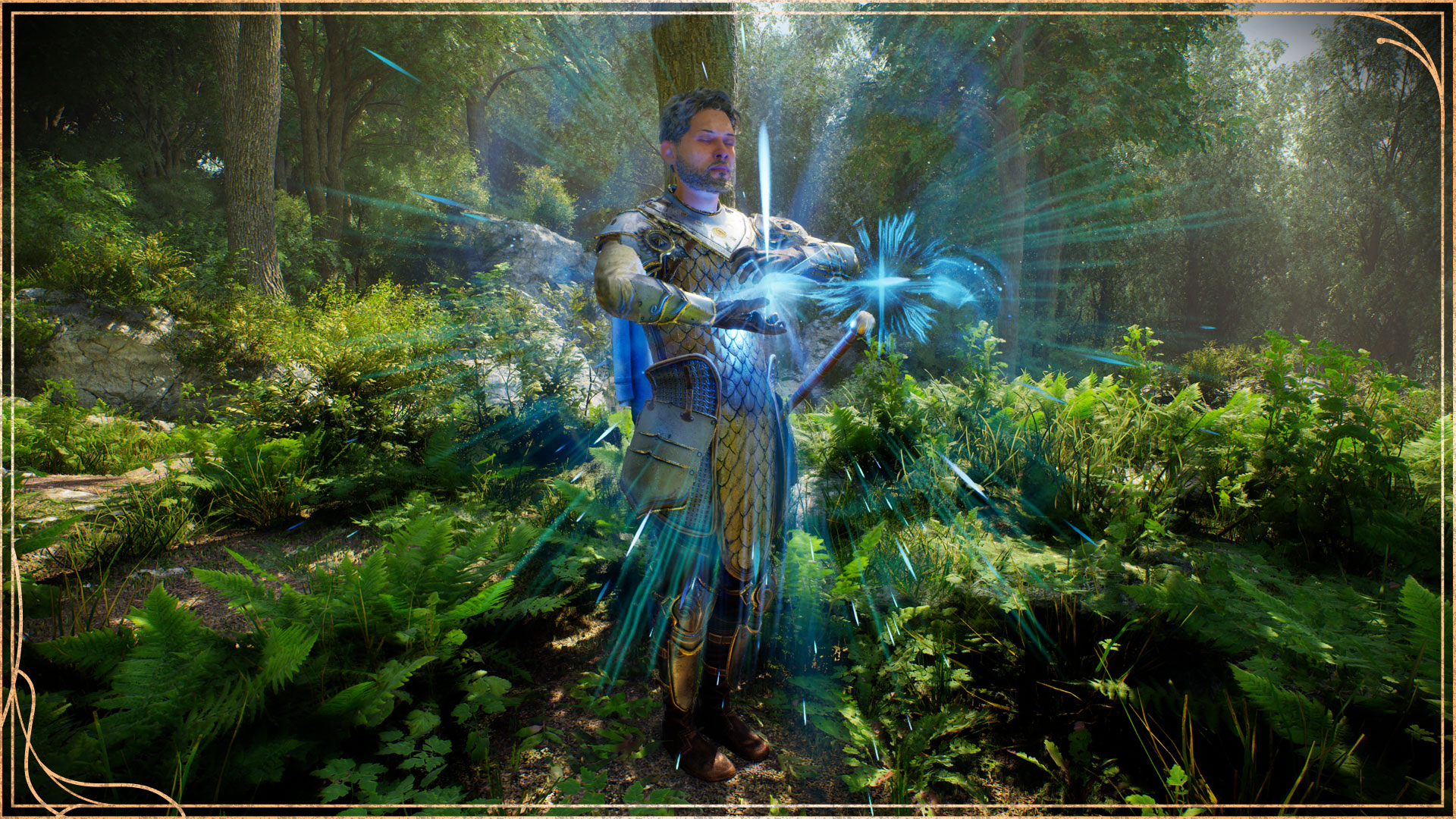
Unsurprisingly when a large nation such as Manacalon thrives on slavery, freedom becomes an ideal that many start to seek. The Oath of Liberation originates from the common folks who through small everyday acts of valor fought to free and protect slaves from the Manacalon Empire, later becoming a Paladin order after the formation of the Argad Republic.
At level 3, they can use their Channel Divinity to blind an enemy at range for up to 1 minute with Blinding Castigation, or shroud their allies for a turn with Slip Away - which in the complete game will give them Invisibility, for now it has been replaced with Blur since… well invisibility hasn’t been implemented yet. The joys of game development!
At level 7, Aura of Liberation prevents you and any nearby allies from being Restrained or Paralyzed. Take that, annoying Entangle users!

The Sorcerer
The seventh and first post-launch class of Solasta I, the Sorcerer will be available from the start of the Early Access in Solasta II. Often compared to Wizards, Sorcerers now have access to a few more tools with the 2024 update to distinguish them from their cousin, such as Innate Sorcery which is somewhat like a magic equivalent of the Barbarian’s Rage, increasing their spell save DC and giving them advantage on spell attack rolls for 1 minute. This, on top of the already existing Metamagic feature, gives them a solid position: the Wizard may be more versatile and know more spells, but the Sorcerer can cast their own arsenal more reliably and with stronger effects. Is that enough to tip the scales? That is for you to judge!
The Mana Painter
Now that Multiclassing is official, the Mana Painter received quite a few changes to avoid their strongest feature being available at level 3. Mana Absorption, which allows them to use their Charisma Modifier for any Saving Throws against a spell, has now been moved to level 6! In exchange, they get Mana Shield at level 3, which grants them temporary HP any time they use a spell slot.
Mana Drain has also received a strong buff, dealing a lot more damage than before and recovering Sorcery Points scaling with your level, effectively giving the Mana Painter another way to recover Sorcery Points outside the base class Sorcerous Restoration.
The Star Child
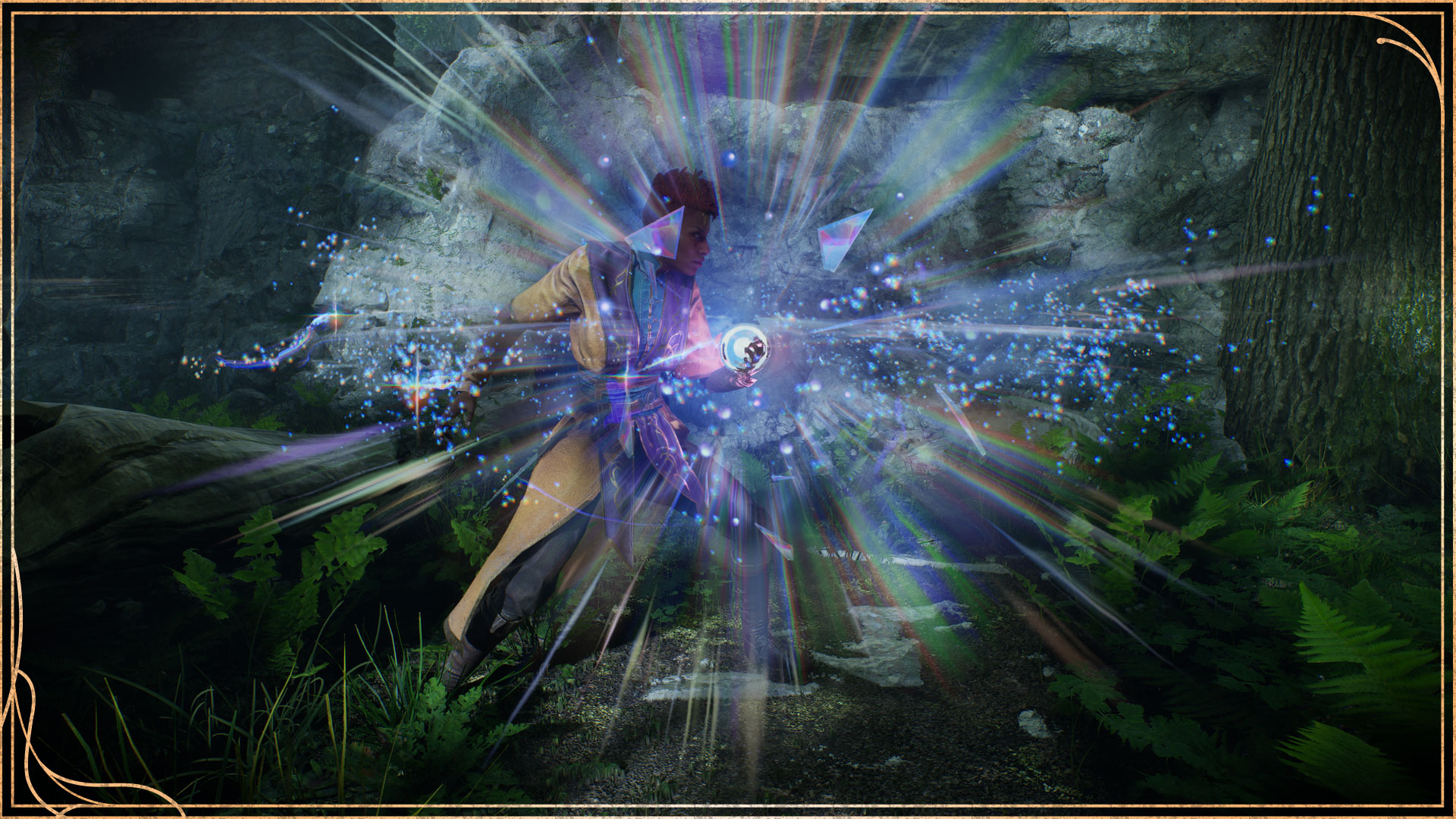
A rare gift once only found among Siklas of the Lost Empire, a Star Child can now manifest in any family no matter their ancestry (although it is still an extraordinary occurence). Blessed by the night sky their affinity to mana is incredible, naturally marking them as powerful Sorcerers.
At level 3, Shooting Stars manifest whenever they use Metamagic in the form of small stars flying towards the target, dealing additional force damage. At level 6, a Star Child can call upon a Guiding Star several times per day, granting them an advantage on their next D20 roll.

The Cleric
Can’t start Early Access without a Cleric, can we? The last of the classic 4 (with the Fighter, Rogue and Wizard), the Cleric is ready to roll out with its 2… wait, 3 subclasses? Yes, turns out the Cleric does not follow any rules! 3 archetypes instead of 2, all of them from Solasta 1 and even featuring the SRD Life Domain when none of the other classes had an SRD archetype! What’s up with that?
Well, domains are a little more complicated than archetypes for other classes - gameplay speaking there are already a whole buttload of official ones we need to work around, and lore-wise it’s a story centered around Maraike, the goddess of life and death of Solasta - meaning not having the Life and Oblivion Domain would be a little strange. And if you’re wondering why not stop there at 2 domains, well… Neither of those two encourage a frontline type of Cleric in 2024, so we decided to bring back the Battle Domain as well for those looking to run in mace swinging.
Life Domain
Unsurprisingly the Life Domain does what many imagine Clerics do best - healing. For those who want a dedicated healer, Life Cleric is your best choice for now! Disciple of Life grants additional HP whenever you heal someone, Preserve Life uses your Channel Divinity to heal your allies as well, and Blessed Healer helps you heal yourself while healing others. Healing ahoy!
Oh and for those who were scratching their head when I said Life is not a frontline cleric anymore - the heavy armor proficiency has now been moved to the level 1 Divine Order of the base Cleric class, so being a Life Cleric no longer means you are among the few to have access to Heavy Armor.
Oblivion Domain
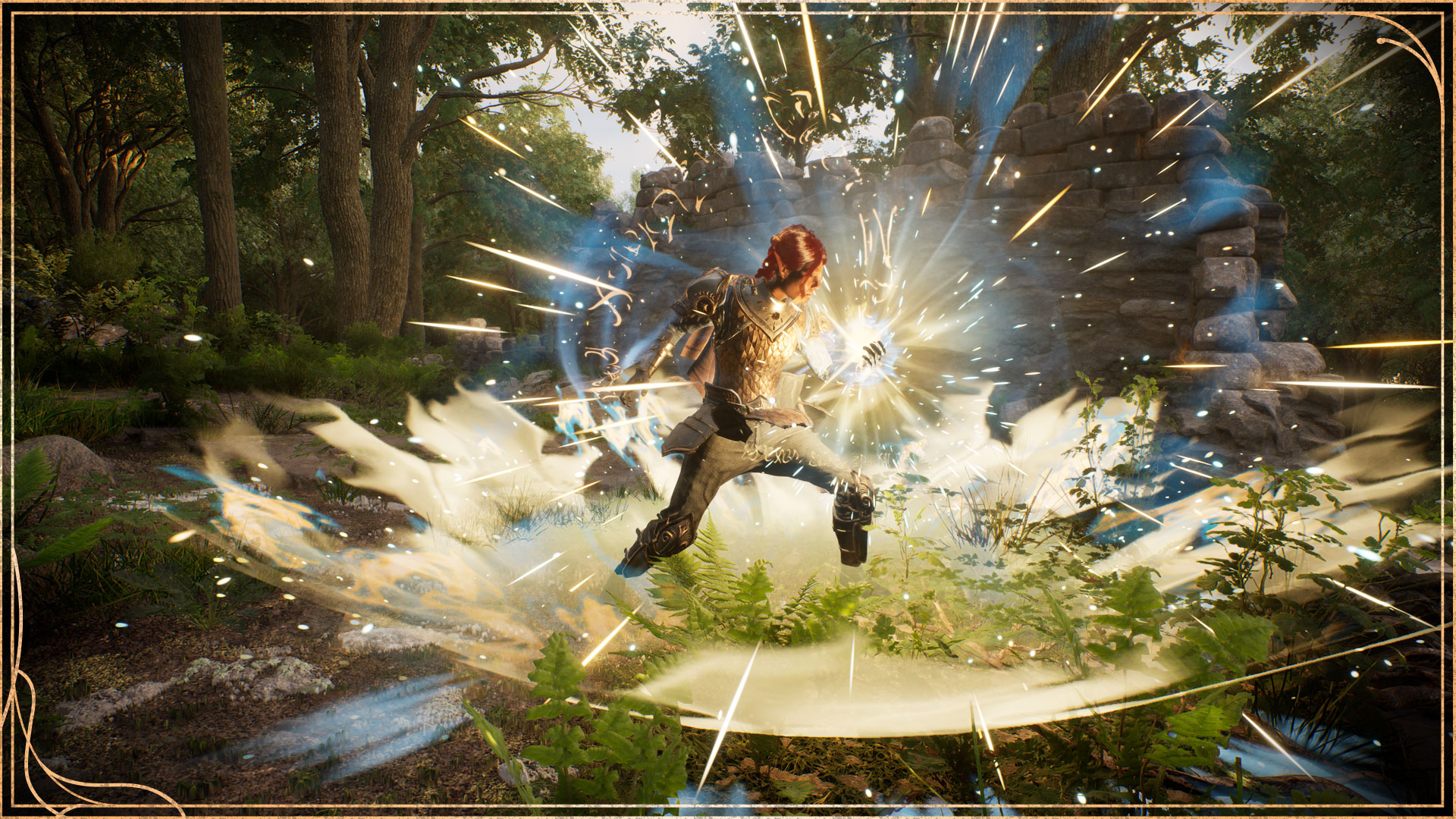
Where there is life, there is death. And there are buffs too, as the Oblivion Domain has gotten some love! Gate Keeper now gives the Cleric the ability to heal unconscious allies to 1 HP from range with a bonus action a few times per day on top of giving advantage to death saving throws like it used to do. Herald of Pain damage now properly scales making it a respectable way to deal AoE damage on top of its weakening effect. And Mark of Fate got standardised to only work once per turn - but deal more damage in exchange.
Battle Domain
To battle! Where the Oblivion Domain received a little more oompf, the Battle Domain needed to be reined in a little more as it severely stepped into the realm of the Paladin. Divine Fortitude and Armed and Ready remain the same, granting a healthy dose of Temporary HP once per day and allowing them to cast spells even with both hands occupied with weapons or shields.
Decisive Strike received a little boost damage-wise but now incapacitates instead of stunning (let’s leave that to the Monk). And finally, Herald of Battle is no longer an aura (let’s leave that to the Paladin) and instead empowers your allies whenever you use Decisive Strike. While empowered, all attack rolls are automatically rerolled on a miss, and an empowered strike deals scaling additional force damage (once per turn).
Wew! That’s the end of a long, long list! I hope you found this article exciting and are already starting to plan your party composition. We sure had fun designing them! See you in two weeks for our next article.
Article by Tactical Myzzrym
Follow us on: